
Cooking Team Building
You cook together, and at the end you eat what you made
What it looks like
A video says in thirty seconds what a page explains in a thousand words: how loud it gets, how much laughing there is, what the hands are doing.
The easiest format we have to make work
Food has always been a universal language, one that connects people and builds relationships that last. Cooking together is something people already know how to do in a group, and that’s why this format works almost every time. No learning curve, no awkward first ten minutes, nobody wondering whether they’ll be up to it. You put on an apron and you start.
Underneath, though, a kitchen is a small production system with all the problems of a company: limited resources, tight timings, one stage depending on another, someone who has to decide and someone who has to deliver. Working side by side, each person contributes their own skills, and learns to cooperate, to communicate and to share responsibility while chasing one goal. If the brigade doesn’t organise itself, dinner comes out late and badly. The metaphor explains itself, because the people in the room watch it happen.
And then there’s the ending
Almost no team building format ends with everyone sitting at the same table eating what they made together. This one does. An afternoon or an evening spent cooking becomes a mixture of good humour, laughter, energy and healthy competition, and the kitchen turns into a place where the barriers come down on their own.
In the end the reward people talk about is the feeling of having built something together. That is also where the work happens. Conversations at a table run differently from conversations in a meeting room, and people who hadn’t spoken during the activity end up doing it over a plate. The day after, what the team keeps is a result that belongs to everyone, and trust in the piece of work somebody else did.
When it makes sense to choose it
It works well if
- you want an activity nobody can experience as something imposed on them
- the group is mixed in age, role and physical condition: here everyone takes part
- the occasion is a celebration: a year-end dinner, the close of a quarter, a milestone worth marking
- you have a few hours, an evening perhaps, and you’d rather stay close by
- there are new people to bring in: the shared table does half the work
It works less well if
- the group is large and you’ve chosen a format tied to the oven: Pizza on its own holds up to 30 people, above that you move to the mixed Pizza and Pasta; Pasta Making, Cocktail and Finger Food scale with no practical limit
- the goal is structured work on a stated change: look at Training
- you have less than two and a half hours: below that you cut the part where you eat, which is the part that counts
Ten ways to cook together
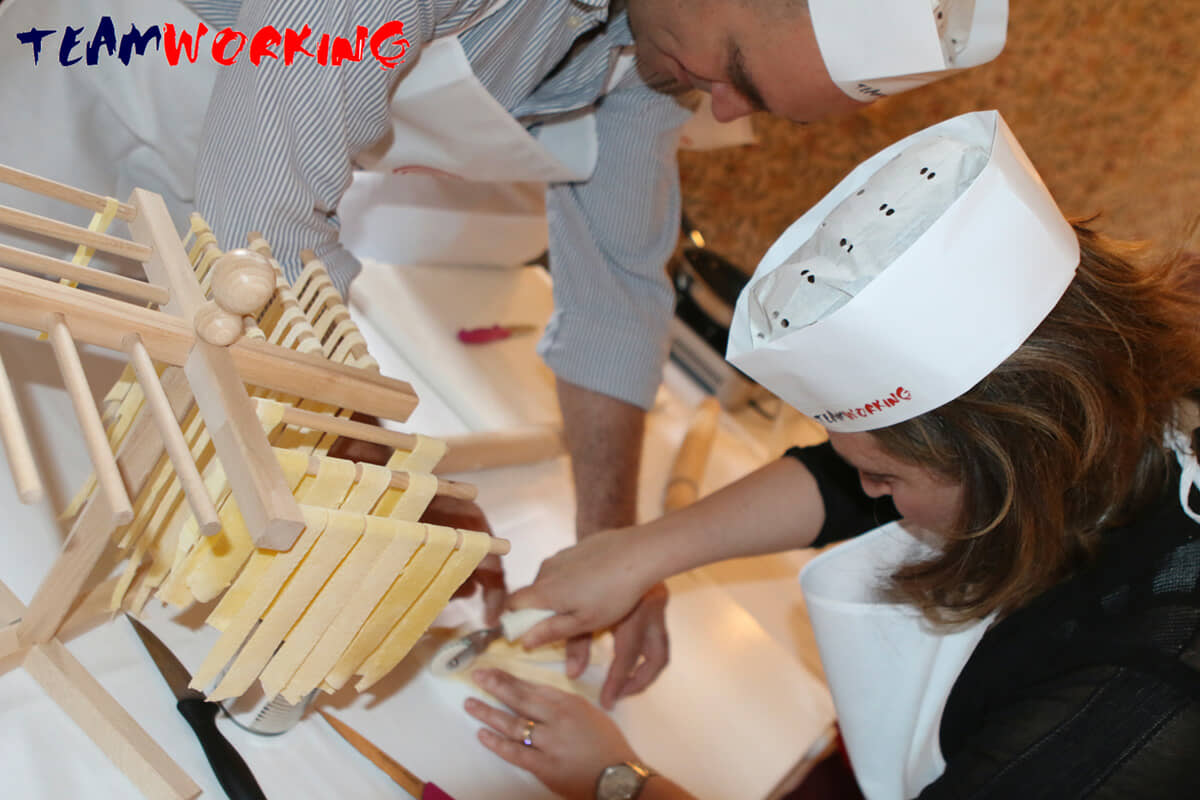
Pasta Making
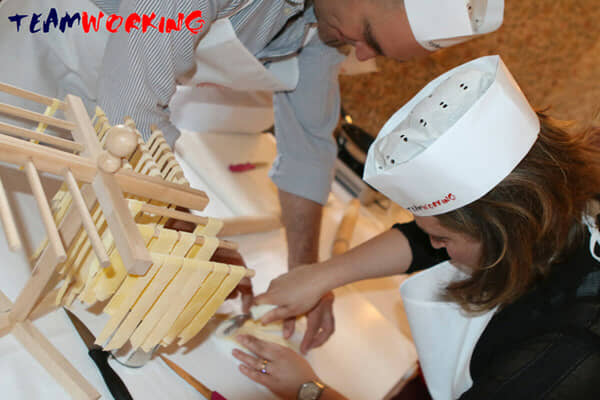
Given our Italian roots, this is a must among our culinary activities. A kitchen turns into a pasta workshop and colleagues turn into pasta makers. It looks light, and it is. Meanwhile the team goes through a whole process (dough, sheet, shape, cooking) with the handovers from one station to the next, and finds out where quality drops when two stages stop talking to each other.
Go to the page →
Pizza Making
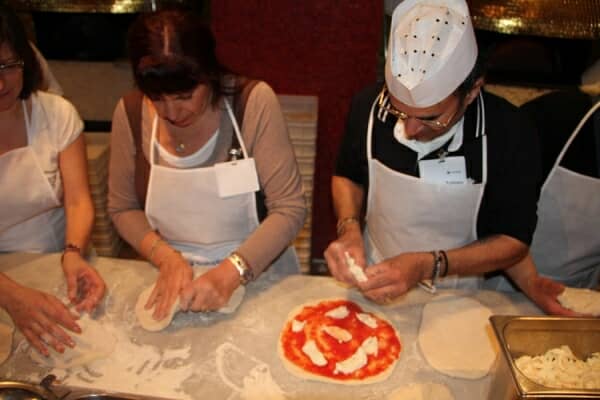
Real Neapolitan pizza, under a master pizzaiolo: knead, top, bake. The most requested in the family, ideal up to 30 people, because there’s one oven and agreeing on the turns is already half the work.
Dinner Cooking
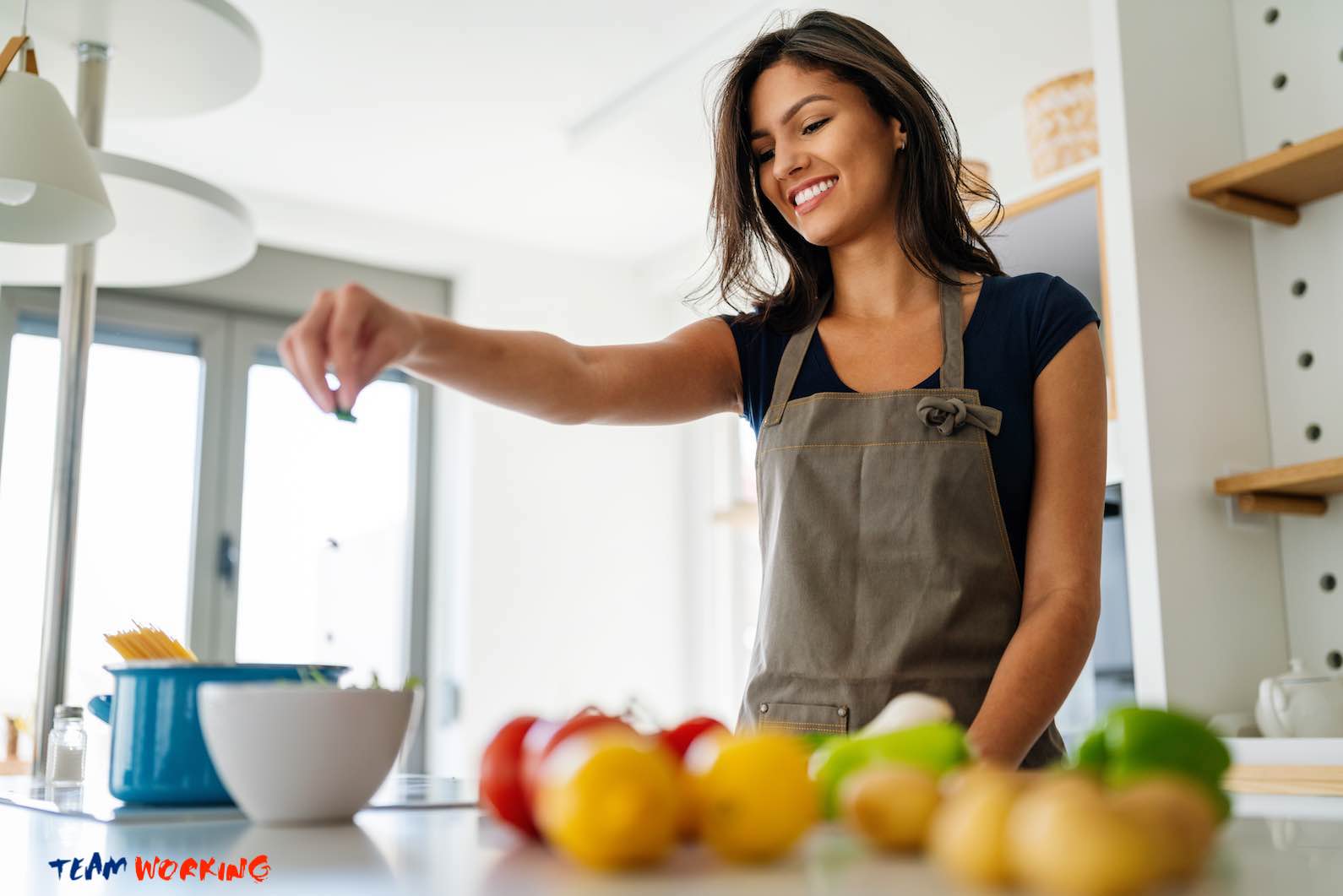
Teams prepare the whole menu of a dinner, one course each, and the dinner only comes out well if the teams’ timings talk to each other. At the end you sit down and eat what you cooked.
Cooking Challenge
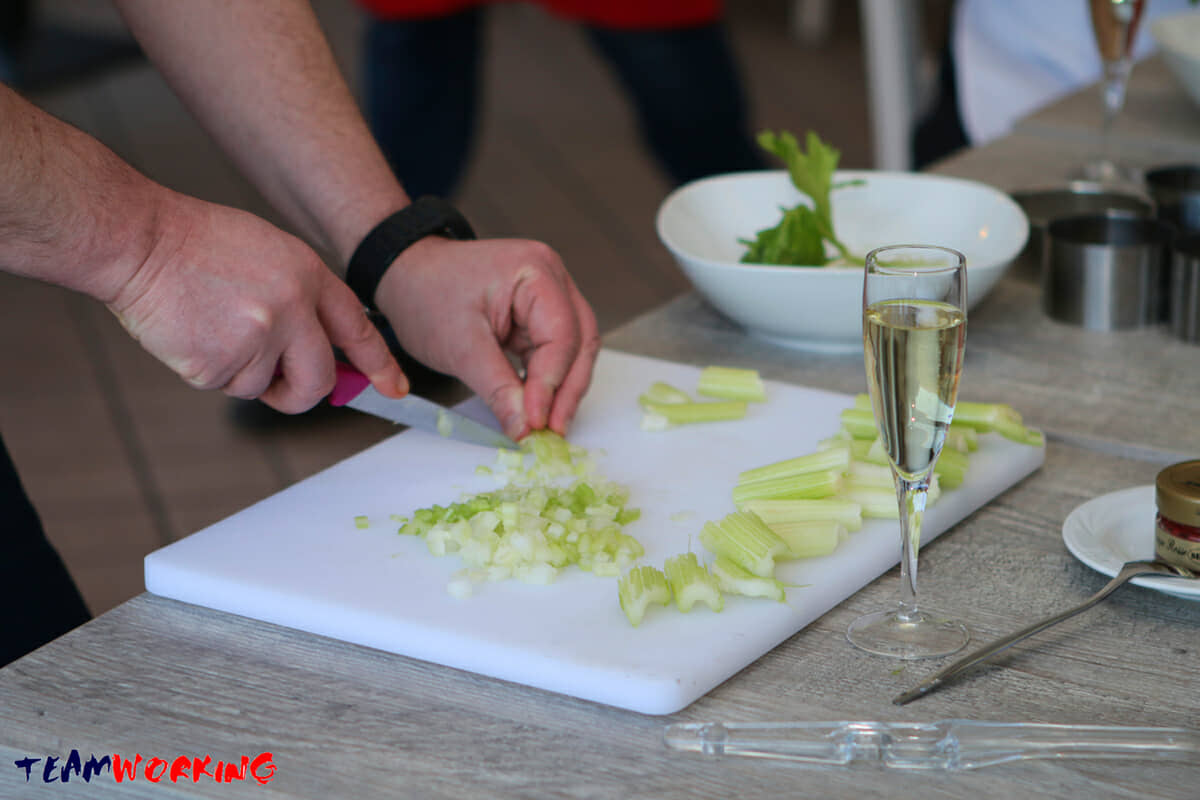
Turning colleagues into competitors: a run of timed challenges across international cuisine, from starters to desserts, judged by professional chefs.
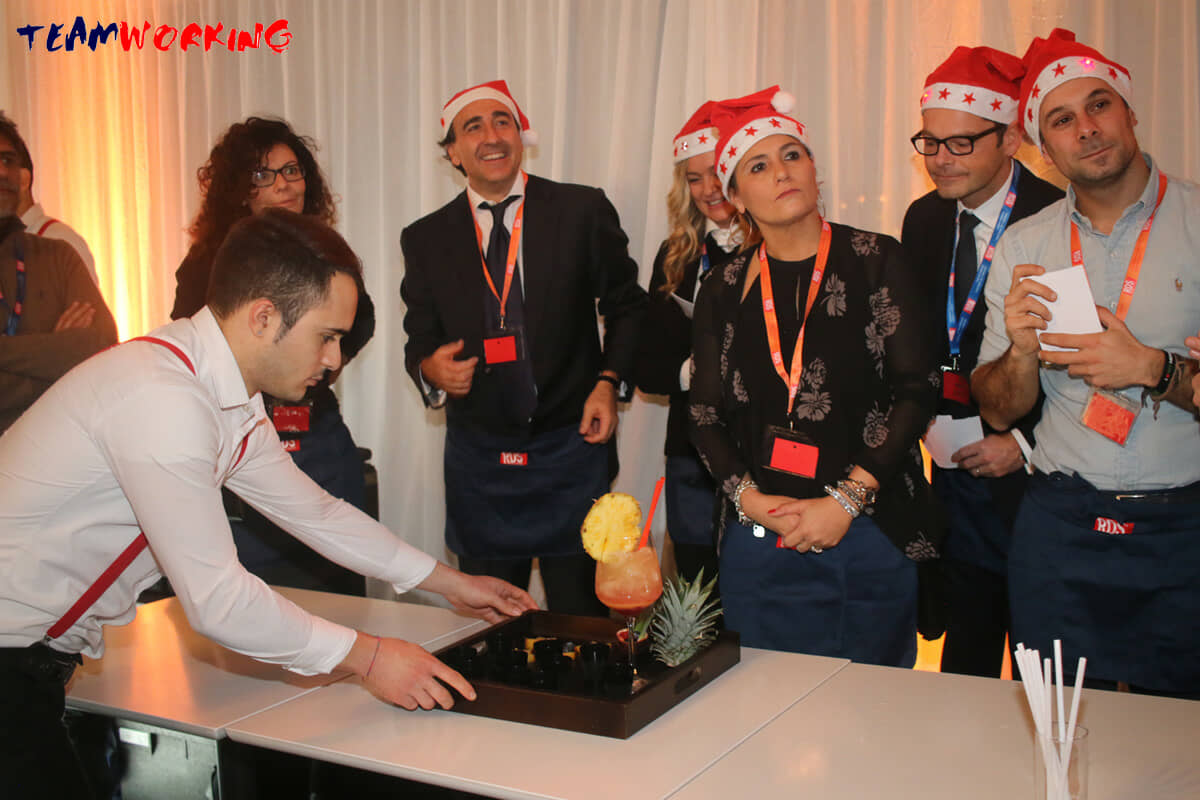
Cocktail Challenge
Who will be the best bartender in the company? Shakers, ingredients and professional bartenders. Each team invents its own cocktail, names it, works out its selling points and takes it to the judges. We run it in licensed venues we work with.
Finger Food Factory
Food you eat with your fingers, no cutlery. It scales well on big numbers, and it teaches you to produce in series without losing the quality.
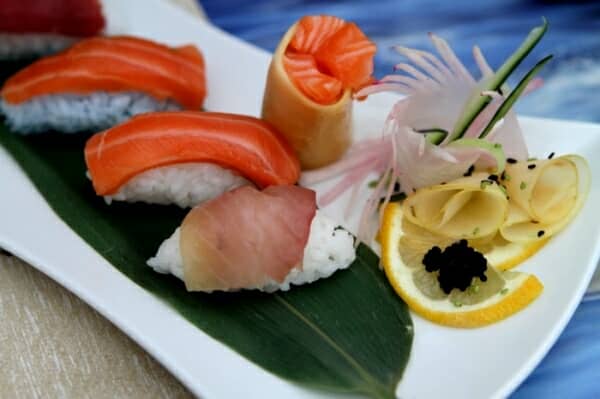
Sushi Making
A sushi master guides the teams, from the warm-up on tradition and technique to hands in the rice. Tools and ingredients are provided; the precision is learned together.
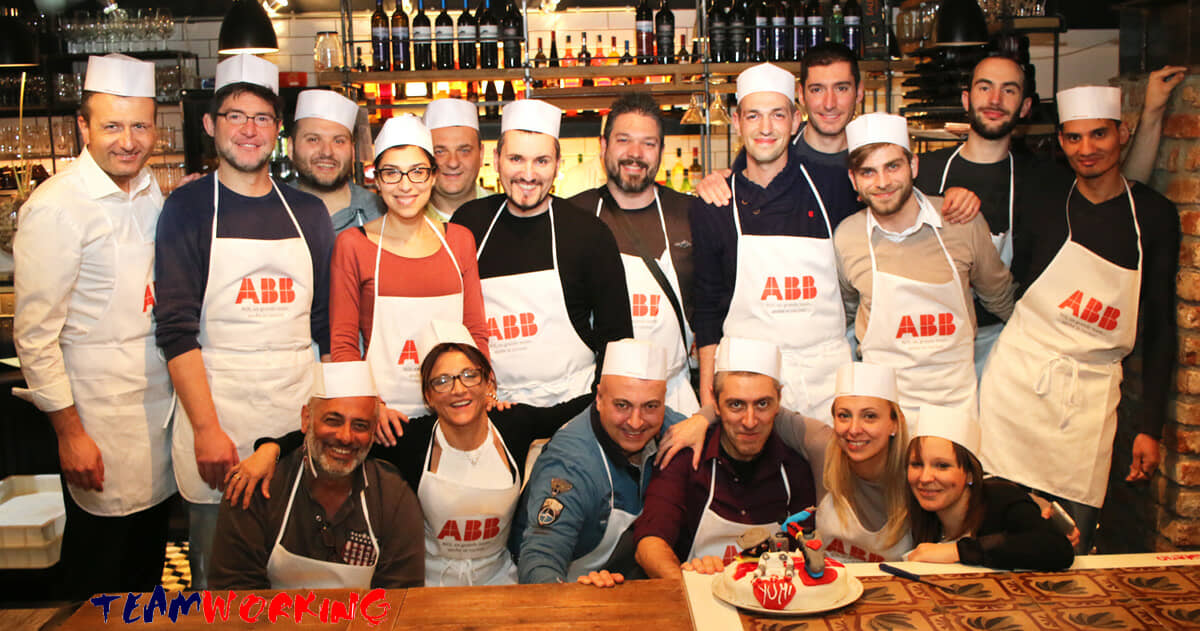
Cake Design
Sweeten the mood: teams decorate cakes with pastry chefs, using sugar paste, glazes, colours and edible glitter. Your logo, your products or your values can be the brief.
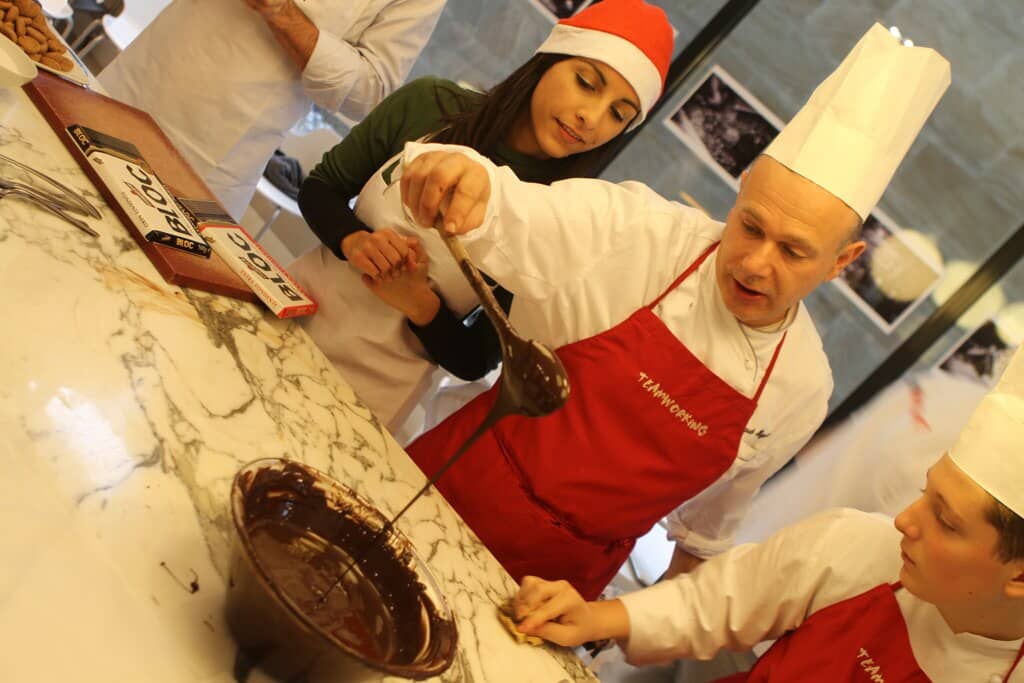
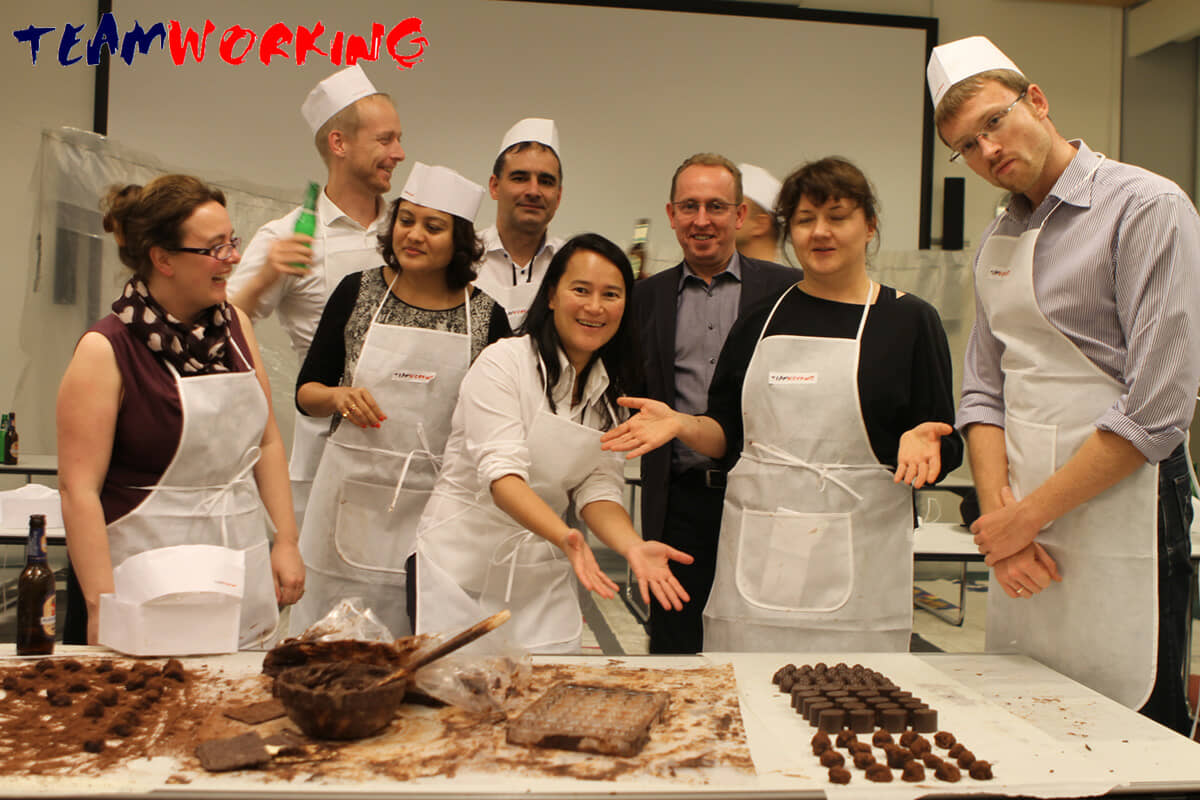
Choco Making
Your own chocolate factory for a day. A maître chocolatier guides the pralines: tempering, moulding, filling, decorating. Everything gets wrapped and taken home.
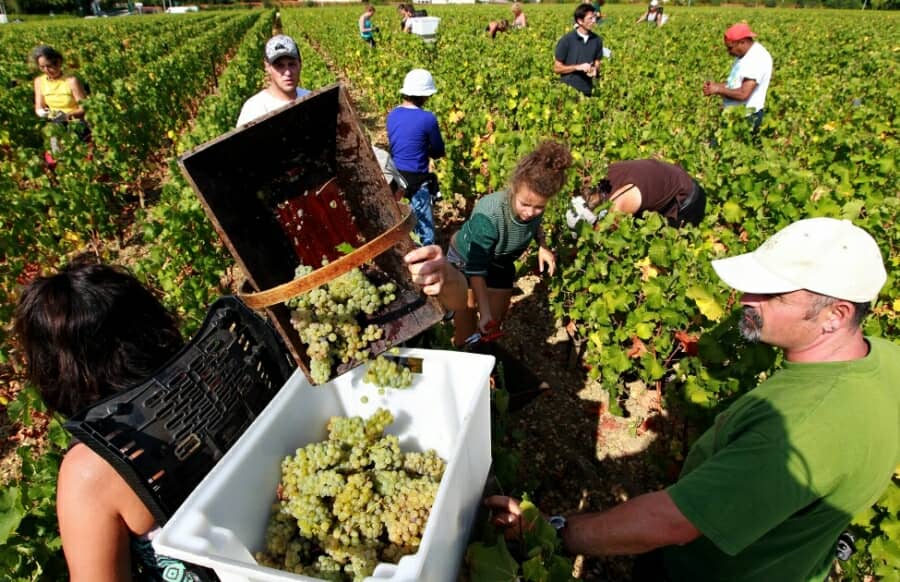
Wine Experience
Not just tasting. Two roads around wine: composing a blend of your own, or the Wine Games, the most active format in the family, where teams race for points and finish on a toast. We run it in licensed venues we work with.
Three questions and the format picks itself
How many people? It’s the question that narrows the field most, and the reason is mundane: there’s one oven. Up to 20-30 people every format works. Above 30 you need work that runs in parallel, the mixed Pizza and Pasta or the Finger Food, because pasta and nibbles do without the oven and you avoid the queue. Pasta Making is the format that scales best of all: we’ve run cooking events from four people up to three hundred.
What’s the occasion? A celebration dinner asks for a convivial format: Dinner Cooking, Cocktail. A working day with a stated objective asks for a competitive structure with a debrief: Cooking Challenge, Finger Food Factory.
How much time do you have? Two and a half hours is the minimum. Three and a half is where these formats are at their best. A whole evening lets you add the tasting or the judging.
When what surfaces deserves an afterwards
An activity surfaces a great deal about how a team communicates, decides and works together, and sometimes what surfaces deserves more time, more depth and a method. That is where a Team Coaching path can begin: a different road, to be taken only if it is needed, to turn what the day made visible into a new way of working together.
Discover Team Coaching →
Let’s talk about your next team building
You don’t need to have picked a format yet. Tell us what you want your team to take home, how many of you there are and where you’ll be, and we’ll do the rest: within 24 hours you get a considered proposal for your case, with the formats that hold up against your numbers, and what each one leaves the team the day after.
Prefer to talk? +971 50 795 9666 · info @ teambuildingincentive.ae