
Team Building: what it is
What it looks like
A video says in thirty seconds what a page explains in a thousand words: how loud it gets, how much laughing there is, what the hands are doing.
What it means, what it’s for and how to choose it
What are we talking about when we talk about corporate team building, team building activities, team building games, training-led team building and experiential team building? Find out with us what team building is, and carry on reading through the other pages of the site to see all the proposals and the different formats. In the other articles you’ll find how to organise a corporate activity, suggestions and ideas for team building based on what your company needs, and the difference between team building and incentive.
Read also:
What does Team Building mean?
How do you write it: Team Building or Teambuilding?
What is corporate Team Building for?
What effects does Team Building have?
How does Team Building work?
When should you run a Team Building?
How long does a Team Building last?
The coach, or team builder
A different kind of Team Building: Online Team Building
Working at a distance is now perfectly possible and more and more common, thanks to new technology and the endless tools the internet makes available. A great many companies had to try it in 2020, and plenty of them found it worked and decided to keep it.
Team Building: what does it mean?
Literally building the team, team building means the set of activities and procedures used to get a group of people interacting in order to improve their ability to work as a team. The activities can be educational, or experiential, or purely playful.
In short, they can be very brief events, an hour or an hour and a half, which already carry the stimulus to team building inside them and need no further reflection.
Activities of this kind can be useful in any setting:
- Inside companies, to motivate a working team, and to improve its communication and collaboration
- During an incentive trip, to entertain and reward the participants
and also
- At school, to improve understanding inside a class, between classes or between a class and a teacher
- In a group of friends, to build group spirit and closeness.
The most widespread version remains the corporate event, where training activities get used to help reach commercial objectives.
Team Building or Teambuilding?
In English it’s written as two words: Team Building. Writing Teambuilding as one word isn’t an error, though. In some countries, Germany for instance, the single word is the more common form. On this site we’ll mostly use the two-word version, and every so often the single word will turn up too.
You’ll also hear management training, corporate training, group building and team construction. Not a synonym but a related method is Experiential Training, a set of exercises and activities used to develop soft skills and communication abilities.
Experiential Training sets out to develop communication through creative metaphors, using instruments borrowed from corporate theatre and from outdoor training.
In particular it means role play and problem-solving challenges that put the participants in a position to learn interactively. Between the cognitive and the physical activities, it turns into a training experience that covers the whole person.
Are there other synonyms?
Corporate Team Building: what is it for?
The purpose of a corporate event is to build the team, meaning to create positive dynamics that let the company’s objectives be reached, without losing sight of how every member of the working team is doing.
Working in a team can be a useful and positive experience, and other times, far too often, it becomes a source of frustration and stress instead. In large national and international companies especially, it’s worth working on improving communication between people.
Problems that look insurmountable because of long bureaucratic chains and too much hierarchy can often be solved in a single meeting, if the attitude is the right one: positive and constructive. Team building helps you practise and exercise effective communication.
The effects of Team Building
It’s been demonstrated scientifically: a good team building sharply improves the mood and the functioning of a team. Where will you notice the improvements?
- Communication
- Listening to each other
- Respect for other people’s opinions
- Trust
- Integration of the team
- Better problem solving
- The ability to handle change and fast-moving circumstances
- The ability to handle pressure
- The ability to manage time and deadlines
- The ability to face a difficult moment, personal or in the business
- Strengthening team spirit
Team Building: how does it work?
Team building works differently from classroom training. The activities work on how the team functions in an underground, implicit way. The trainer and the room appear only at the opening briefing and at the closing debrief, when the activity gets presented and when its outcomes and consequences get summed up. For all the rest of the time the team is in a setting deliberately different from and far away from the company routine.
You don’t always have to head into untouched wilderness or travel into the desert to find the right environment for a corporate team building event. The right space, whose characteristics always depend on the kind of team building organised, might be the meeting room of a hotel, a restaurant, a park.
You can even use part of the company’s own spaces. If the activity itself is well designed and organised, the novelty of the format is enough to make people forget the old group dynamics.
When should you organise a corporate Team Building?
A training activity of this kind can be useful on a great many corporate occasions. For example:
- In a delicate period for the company: a merger or a difficult moment
- As an integral part of an incentive trip;
- As a celebratory moment at the peak of an important meeting;
- During a corporate Family Day, as an activity that works for adults and children alike;
- During a holiday period, at the launch of a new product, or on another particular company anniversary.
How long does a Team Building last?
It can have very different lengths depending on the purpose given to the corporate event. It runs from a few minutes to several days of activity.
- 15-60 minutes: a short icebreaking intervention between the sessions of a convention, to break the ice and wake the participants up.
- 2-4 hours: a training activity inside a conference, to work on how the team functions and develop more effective ways of communicating.
- 1-2 days: a corporate event that takes the participants into a setting away from the company’s normality, to integrate new people into the team and work in depth on solving business problems.
- A periodic intervention inside a six-month or annual corporate training path.
The Coach, or Team Builder
The team is accompanied throughout the event by professional trainers and coaches. Thanks to their experience they can keep track of the team’s progress constantly, stimulate creativity and imagination, and make sure everyone is involved in the shared work.
The coach’s role in team building exercises changes depending on the kind of corporate event organised. Sometimes specialist help is needed.
The most typical example? The kitchen activities, or Team Cooking. Those can’t be run without a chef. Or a Survival Training session. There the help of a certified instructor matters both for safety and because the techniques being taught are demanding.
Other times the team builder’s role needs no specific knowledge but a strong ability to motivate and organise. When? In a Treasure Hunt or an Urban Game, for instance. During the activity nothing happens that the participants couldn’t handle with their everyday abilities. Team spirit, motivation and the ability to collaborate, though, depend to a very large extent on the coach.
Often the coach or trainer also acts as the assessor of the group assigned to them. They watch the communication dynamics and the emotional reactions of the participants closely throughout the activity, and at the end they draw a profile of each member of the team and one of the team taken as a whole. That profile is useful to the organiser and to the lead trainer for the final debrief. It can also be given to the company, which then understands better what happens inside its own teamwork.
Adventure Team Building: why choose it?
The Action or Adventure category gathers the most active and dynamic formats. The advantage? Working on problem solving, communication and teamwork through sporting activities in the open air. These activities ask for various levels of physical and mental effort, and in every case they pull the participants right in.
WHO: fairly young and active groups that need to work intensively.
WHEN: in difficult moments (a merger, an acquisition, fast growth) or to integrate teams with high turnover.
Cooking Team Building: why choose it?
Team building in a kitchen is enjoyable and it’s also effective. A kitchen demands serious division and organisation of the work, and good time management.
WHO: suited to international teams who want to discover Italian culinary traditions, and equally to local teams of any age.
WHEN: perfect for a corporate celebration, as the moment that comes before dinner together.
Creative Team Building: why choose it?
The Creative formats let you make the company’s mission, vision and values visible through artistic metaphors. They go well with a phase of brainstorming and shared reflection on the objectives and the future of the business.
WHO: teams of every age and every background who are open to something new and to being creative.
WHEN: the creative formats are particularly useful in moments of growth, change and difficulty.
Music Team Building: why choose it?
Musical events are a way of connecting with colleagues through feeling rather than through words. Some formats carry more training value, others suit building team spirit.
WHO: teams of every age and every background.
WHEN: when the work needs to be on communication, sharing, listening to each other and expressing what people feel.
Social Team Building: why choose it?
Building a corporate team can have a second purpose: doing some good. That way the team finds more motivation in knowing it’s part of something positive. The Social formats take very different shapes, and what they have in common is the effort of helping somebody else, either by involving people who need it or by making something useful.
WHO: teams that need motivating.
WHEN: around holidays and company celebrations.
Urban Game: why choose it?
An Urban Game is the training and creative version of a treasure hunt through a city. The participants discover the streets and the landmarks by carrying out creative tasks in which they interact intensely with each other and with the people who live there. The route can be designed to measure to meet everything the client needs.
WHO: particularly suited to international teams who want to discover the city they’ve landed in.
WHEN: during an incentive trip or a meeting away from the company’s own offices, or the other way round, to show the city to a task force arriving from abroad.
Desert Team Building: why choose it?
The Desert formats put the team under pressure in an environment full of challenges and difficulties to deal with. It isn’t genuinely extreme and it isn’t dangerous, and the physical effort is certainly greater than in other formats.
WHO: young and dynamic teams.
WHEN: when the work needs to be on handling pressure and handling a crisis, or on bringing new members into the team.
Training Team Building: why choose it?
And if you want to know more about the incentive side of corporate events, there’s a page dedicated to it.
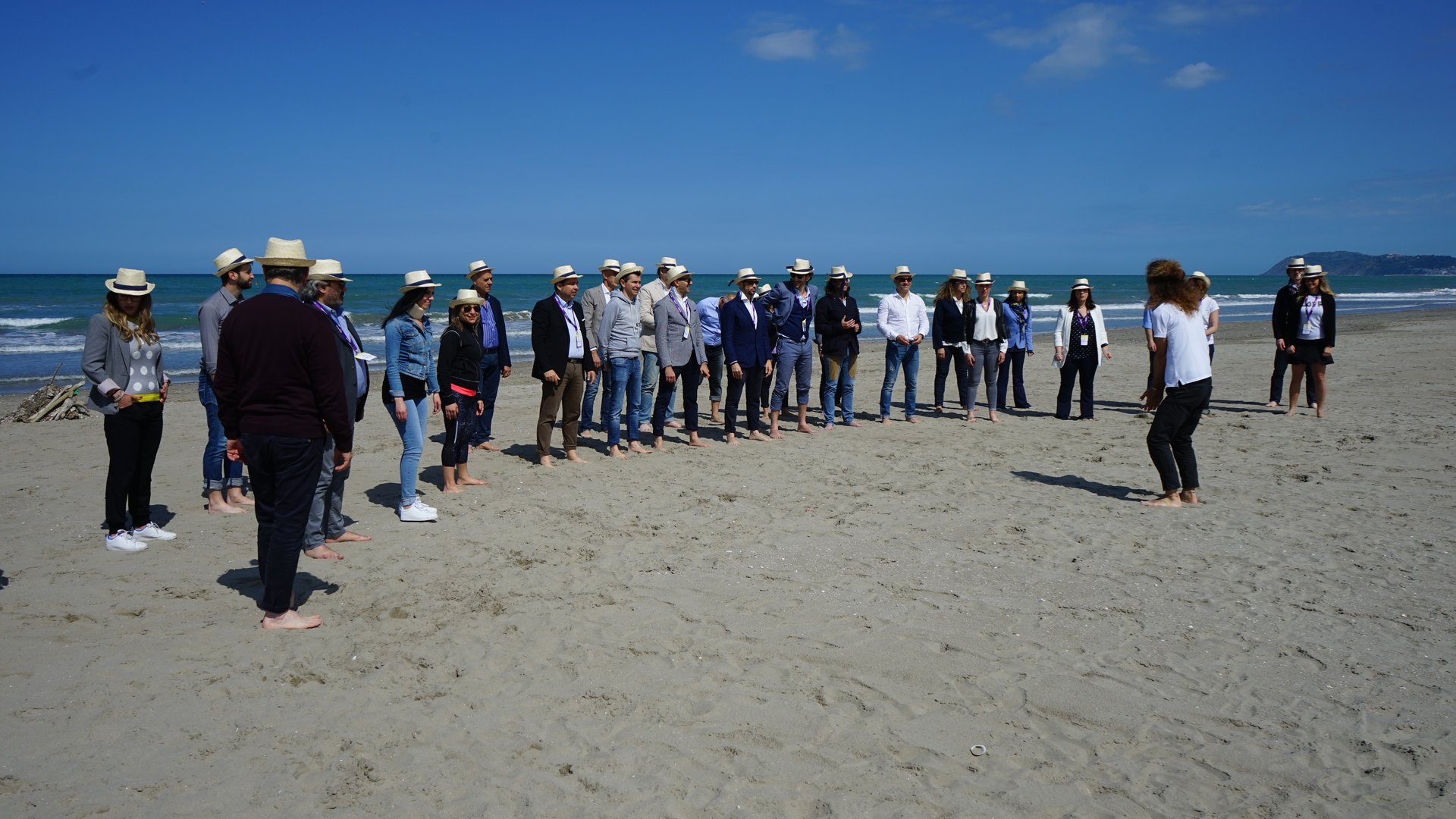
When what surfaces deserves an afterwards
An activity surfaces a great deal about how a team communicates, decides and works together, and sometimes what surfaces deserves more time, more depth and a method. That is where a Team Coaching path can begin: a different road, to be taken only if it is needed, to turn what the day made visible into a new way of working together.
Discover Team Coaching →
Let’s talk about your next team building
You don’t need to have picked a format yet. Tell us what you want your team to take home, how many of you there are and where you’ll be, and we’ll do the rest: within 24 hours you get a considered proposal for your case, with the formats that hold up against your numbers, and what each one leaves the team the day after.
Prefer to talk? +971 50 795 9666 · info @ teambuildingincentive.ae