
The Language of Leadership
The words you lead with, when giving orders isn’t enough any more.
Why command isn’t enough any more
In today’s teams people are often more competent than their manager on their own piece of the work, and they take decisions on their own all day. A role built on control doesn’t get much grip there: you can’t genuinely control work you wouldn’t know how to do.
The job moves from the content to the process. Less assigning tasks, timings and methods, more holding the relationships and the direction together. The instruments become persuasion and negotiation, and those instruments are made of words.
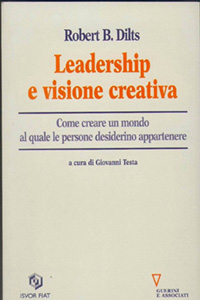
The task can be summed up like this: describe a world people want to belong to. The description comes before the building, and that’s why the words you choose aren’t a detail of style.
Deciding quickly, or deciding together
The two modes have opposite costs, and a company that works uses both, knowing when.
Deciding from the top is fast and applies immediately. The bill arrives later: a solution the people executing it didn’t help choose gets executed with less conviction, and sometimes it’s simply unworkable, because whoever decided didn’t know about a constraint further down.
Deciding together surfaces those constraints and produces choices that stand up. The cost is time, and the fact that a compromise capable of satisfying everyone doesn’t exist, less so the larger and more varied the group.
The mistake isn’t preferring one of the two. It’s always using the same one.
Three things that work
- Recognising good work. The formula comes from Blanchard and Johnson’s One Minute Manager: catch people doing something right. Pointing out a mistake comes naturally, praising much less so, because a good result is taken as owed. Sometimes people stay quiet for fear the other will get above themselves, sometimes because when somebody does better than we would have done, our own position wobbles. Genuine recognition, the kind that doesn’t sound like a formality, makes a person more willing to put themselves forward and to take on risks their role never required.
- Giving feedback. It’s there to check whether what got done matches what you had in your head. It’s the step most often skipped, on the assumption of having been clear. Just remember how many times we confirm the place and time of a meeting to each other, and you stop being surprised that a complex piece of work needs explaining more than once.
- Spending time on explanations. There’s always time to do a thing twice and never any time to do it properly the first time. The minutes saved on the explanation come back multiplied.
The technique that costs least of all
Ask the person listening to repeat, in their own words, what they understood. It has to be announced beforehand, not afterwards: knowing they’ll have to reformulate it, a person listens differently.
It’s needed because words are incomplete by construction. Success, dedication, quality are containers each person fills with their own experience. Until you hear how the other person filled them, you’re only imagining that you’ve understood each other.
And it’s worth saying explicitly that not understanding is allowed and getting it wrong is allowed. If it isn’t clear that it’s permitted, nobody will ask the question that mattered.
Not sure where to start? The Team Alignment Check is a free test: twenty-one questions across seven dimensions. It tells you where your team is already aligned and where it isn’t, and the report arrives by email.
Let’s talk about your next team building
You don’t need to have picked a format yet. Tell us what you want your team to take home, how many of you there are and where you’ll be, and we’ll do the rest: within 24 hours you get a considered proposal for your case, with the formats that hold up against your numbers, and what each one leaves the team the day after.
Prefer to talk? +971 50 795 9666 · info @ teambuildingincentive.ae