
Team Padel
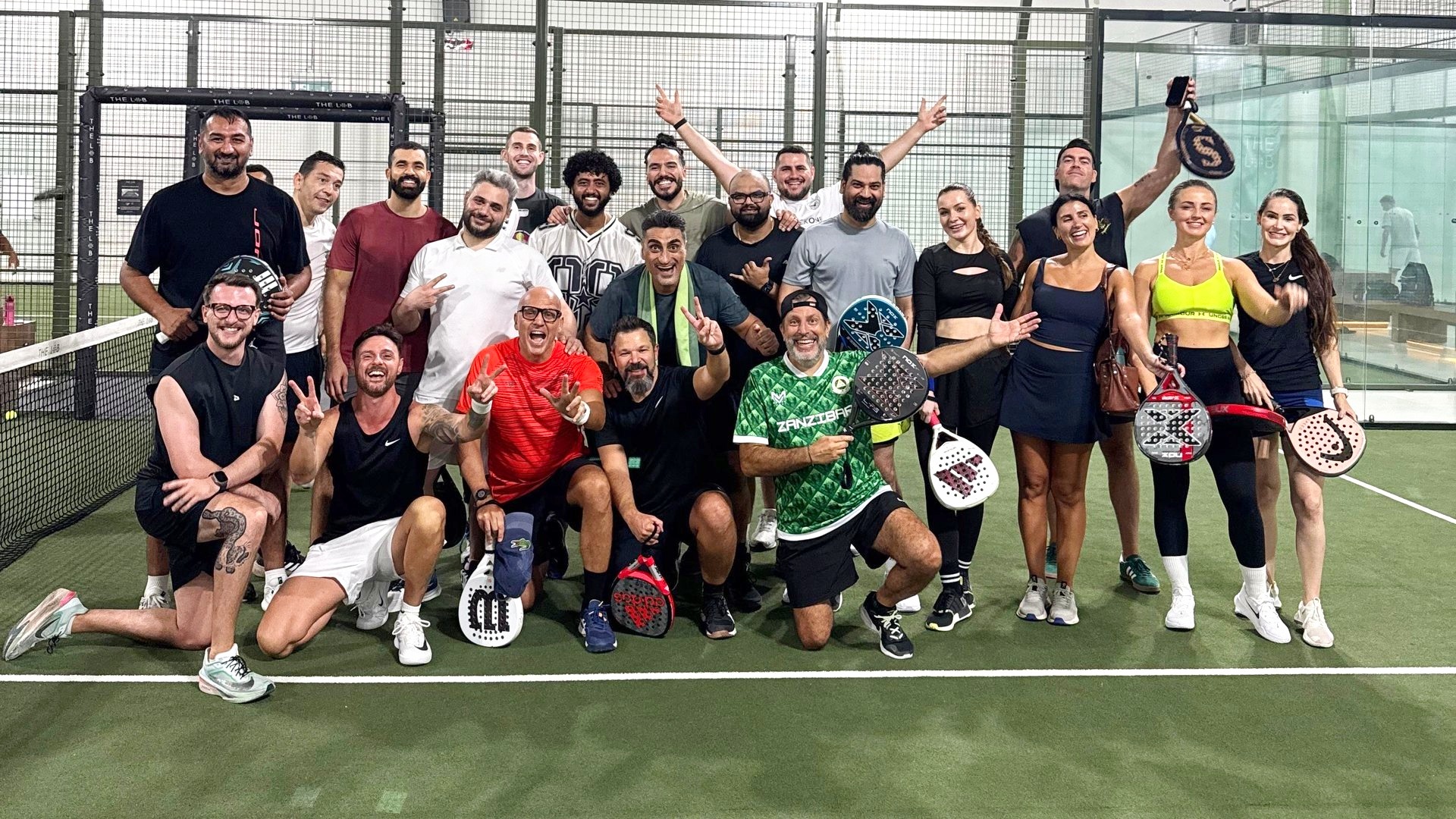
The team plays padel while managing a hand of cards.
What it is
Teams face each other on a padel court, but with strategy cards in hand and a coach watching from the side. The rotations are continuous, the matches short, and at the end everyone goes back to the table to work out what actually happened. The score depends on the choices, not on the shots.
When it makes sense to choose it
It works well when a group is mixed in role, age and sporting ability, and you need an activity that puts nobody in difficulty over their physical condition. Being able to play padel doesn’t count here; reading the situation, deciding quickly and trusting your teammates does. Someone who has never held a racket starts level with someone who plays every weekend.
It works less well if you’re after pure sporting competition. That isn’t the objective, and anyone who turns up to win gets bored.
What it looks like
Very little of it looks like a padel match. The pairs keep changing, sometimes there are three players on one side, sometimes somebody is sitting out because the other team decided so, and every so often a racket comes out that is the wrong size on purpose.
How it actually works
Thirty-minute slots with breaks, and groups rotating across several courts. It runs as a team route, where every rotation is a chance to change approach. The teams are liquid: who is on court changes through the day, and the changes come from decisions rather than from a running order, so nobody spends the morning watching.
The court becomes a table of decisions. Each team manages resources, time and energy, exactly as at work, except that here the mistake shows up immediately, on the scoreboard, and not three months later in a meeting.
The resources are literally cards. Each team gets a hand at the start of the day and that hand doesn’t refill. One doubles your points for two minutes. One puts a player of the other team on standby for a while. One lets you field three at once. One hands out rackets in sizes nobody is used to. Only one can be active at a time, so every play rules out the others. A team that reaches the end still holding cards hasn’t wasted them: unspent cards count in a tie-break.
The coach doesn’t referee, they watch. They decide the rotations, handle the key moments, and take notes on things nobody on court notices. The final debrief brings every choice back to two concrete questions: when did you use your resources too early, and who actually made the difference.
Three questions
Do you need to be able to play padel?
No. The standard of play doesn’t count, and that isn’t a polite way of saying it helps to be fit. The score is built on the team’s choices.
How many people does it take?
The group scales with the number of courts available. Mornings the courts are usually free, so it works well with larger numbers too. Above fifty people we work it out together.
Do you need a dedicated facility?
No, we work with clubs we have arrangements with. The logistics are ours.
When what surfaces deserves an afterwards
An activity surfaces a great deal about how a team communicates, decides and works together, and sometimes what surfaces deserves more time, more depth and a method. That is where a Team Coaching path can begin: a different road, to be taken only if it is needed, to turn what the day made visible into a new way of working together.
Discover Team Coaching →
Let’s talk about your next team building
You don’t need to have picked a format yet. Tell us what you want your team to take home, how many of you there are and where you’ll be, and we’ll do the rest: within 24 hours you get a considered proposal for your case, with the formats that hold up against your numbers, and what each one leaves the team the day after.
Prefer to talk? +971 50 795 9666 · info @ teambuildingincentive.ae