
Cake Design
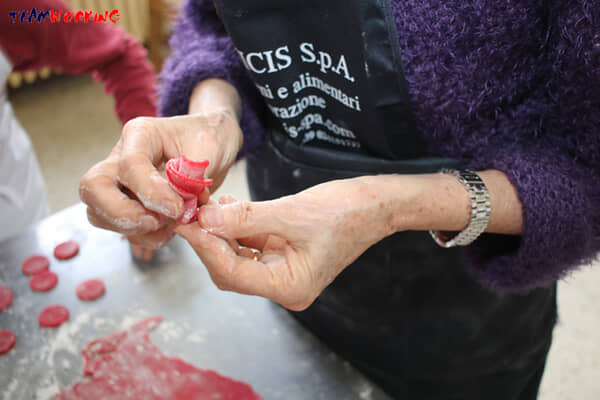
The team decorates a cake with sugar paste.
What it is
Looking to strengthen collaboration and spark some creativity? Sweeten the mood. Divided into small groups, people prepare and decorate cakes under the guidance of expert pastry chefs. Each team gets all the tools and materials: glazes, gels, food colouring, edible sprays, sweets, sugar gems, glitter.
Teams start with icebreakers to get the imagination going, then move into a friendly contest for the best themed cake.
When it makes sense to choose it
It works well when you need something calm after a tense day. You sit down, you work with your hands on something small, and the tone comes down on its own.
It works well when you want the company inside the activity rather than in the background. Your logo, your products or your core values can be the brief, and sugar paste can be modelled into any shape at all.
It works less well if you’re after hard competition or movement. There is a contest, but it’s a friendly one and the pace is slow.
What it looks like
A video says in thirty seconds what a page explains in a thousand words: how loud it gets, how much laughing there is, what the hands are doing.
How it actually works
Cake decorating is more than a culinary skill: it’s edible art. Each team decides first what it wants to represent, then divides the work: who rolls, who cuts, who models the small pieces, who assembles. It’s a chain where each person’s piece has to fit with everybody else’s, and the teams that start decorating before agreeing find out halfway through.
Presentation, innovation and originality are the criteria that decide the winning team. Technical difficulty doesn’t come into it, so nobody is cut out for lacking a pastry chef’s hands.
An example of what you can ask of the format. With a robotics company we proposed reproducing miniatures of their products in coloured sugar paste. The teams drew the design, chose which mechanism to reproduce and the colours, and out came robots all different from each other, defined down to the smallest details. Some of the gears actually turned. The little robots then decorated a cake, which was eaten after dinner. The day after, what stayed wasn’t the cake: it was that a group had agreed on one image and built it in pieces that fitted.
Three questions
Do you need to know how to cook?
No, and there’s no cooking involved either: there’s decorating. Sugar paste handles like modelling clay and the pastry chefs stay beside the teams.
Can it be done on the company’s theme?
Yes, and that’s when it gives most. Products, logos, values the group recognises: the theme gets agreed while the day is being designed.
Do you eat what you make?
Yes. The decorated cakes are eaten at the end of the day or after dinner.
When what surfaces deserves an afterwards
An activity surfaces a great deal about how a team communicates, decides and works together, and sometimes what surfaces deserves more time, more depth and a method. That is where a Team Coaching path can begin: a different road, to be taken only if it is needed, to turn what the day made visible into a new way of working together.
Discover Team Coaching →
Let’s talk about your next team building
You don’t need to have picked a format yet. Tell us what you want your team to take home, how many of you there are and where you’ll be, and we’ll do the rest: within 24 hours you get a considered proposal for your case, with the formats that hold up against your numbers, and what each one leaves the team the day after.
Prefer to talk? +971 50 795 9666 · info @ teambuildingincentive.ae