
CSI Forensics
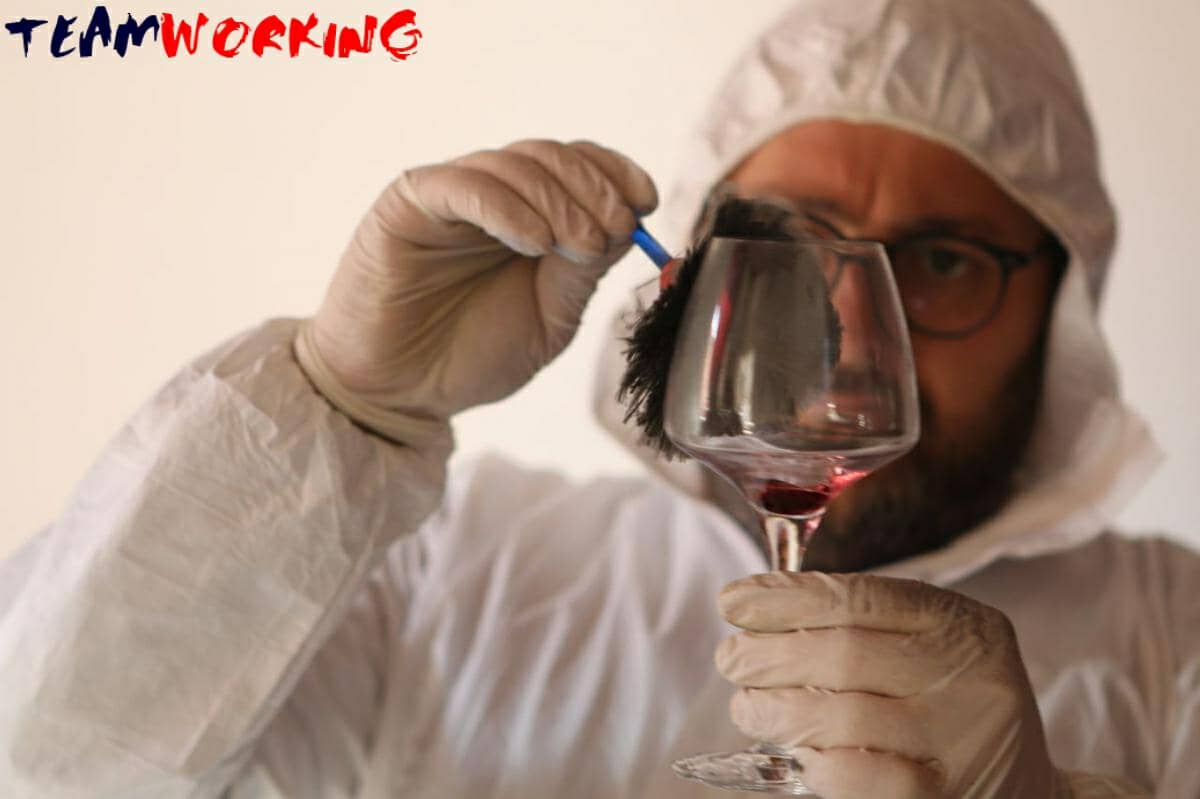
The team investigates a staged crime scene.
What it is
C.S.I. stands for Crime Scene Investigation. In the middle of a meeting or a convention, word arrives of a crime committed a few steps away, in the very hotel where the group is staying, and it falls to the people in the room to investigate. Nobody expects a twist like that in the middle of a working day, which is exactly why it wakes everyone up.
Each team follows its own investigative instinct, with the scientific police briefcases we hand over, and races to close the case before the others. At the end, though, what counts is arriving at a conclusion all together.
When it makes sense to choose it
It works well set inside a larger event, because it’s born as an interruption: you’re doing something else and suddenly there’s an open case. The surprise does half the work.
It works well with groups that trust impressions more than they trust data. Here the difference between what you saw and what you inferred becomes measurable, because a wrong assumption sends the team off investigating the wrong person.
It works less well if you’re after physical movement. You observe, you analyse and you question.
What it looks like
A video says in thirty seconds what a page explains in a thousand words: how loud it gets, how much laughing there is, what the hands are doing.
How it actually works
There are two phases. First the teams learn what real investigators do: lifting fingerprints with powder and brush on smooth surfaces like glass and mirrors, and with iodine tincture on porous ones like wood and paper; taking chalk casts of the shoe prints left on the ground; reading what a DNA result says. If there’s time we turn it into a challenge of its own, with each group working out which print belongs to which participant. Then the real search begins: evidence to collect and analyse, objects that may have been used, witnesses to question and weigh up for the truth of what they say. From there each team builds its hypothesis of the crime and states it in the final trial.
The smallest detail can decide the case, and nobody can examine everything alone: there’s more than one scene, more than one instrument, and the time is what it is. Dividing up the work is a condition for getting to the end. Teams also learn to tell an assumption from a fact, because an expectation about who did it sends the investigation off after the wrong person and gets an innocent one convicted. The day after, that distinction is what the group carries back to work.
The culprit may be one of the people in the room.
Three questions
Do you need to be good with clues?
No. The instruments are explained beforehand and the analysis is guided. The difficulty lies in keeping what you saw separate from what you assumed.
Can it run inside a convention?
That’s where it gives most. It grafts onto a day already in progress, and the interruption is part of the format.
How many teams do you need?
At least two, because the race between independent teams is part of the mechanism. Each works on its own case without seeing what the others are doing.
When what surfaces deserves an afterwards
An activity surfaces a great deal about how a team communicates, decides and works together, and sometimes what surfaces deserves more time, more depth and a method. That is where a Team Coaching path can begin: a different road, to be taken only if it is needed, to turn what the day made visible into a new way of working together.
Discover Team Coaching →
Let’s talk about your next team building
You don’t need to have picked a format yet. Tell us what you want your team to take home, how many of you there are and where you’ll be, and we’ll do the rest: within 24 hours you get a considered proposal for your case, with the formats that hold up against your numbers, and what each one leaves the team the day after.
Prefer to talk? +971 50 795 9666 · info @ teambuildingincentive.ae